Duraguard Protective Coating Solutions

Commercial & Industrial Concrete Floor Systems & polishing
Chemical Resistant Flooring Systems in Racine, WI
Chemical resistant flooring in Racine protects concrete substrates from the acids, alkalis, solvents, and caustic cleaning agents that come with daily manufacturing and processing operations.
Duraguard designs and installs seamless polymer flooring systems — including Acid Guard, Durapoxy HP novolac, Solventguard, and Duraclad urethane cement — for Racine-area plants, processing facilities, containment areas, and regulated environments.
We’re a family-owned industrial coatings contractor headquartered in Racine, Wisconsin, serving facility owners, plant managers, engineers, and general contractors across Southeast Wisconsin and Northern Illinois.
Schedule a free chemical exposure assessment and site evaluation for your Racine facility.
Why Racine Facilities Need Chemical Resistant Flooring
Racine’s industrial base — metal fabrication, chemical processing, food and beverage production, and pharmaceutical manufacturing — subjects concrete floors to continuous chemical attack that standard sealers and coatings simply cannot withstand.
Without a properly engineered system, concrete pits, dusts, cracks, and absorbs contaminants that are impossible to remove.
Chemical Exposure Threats to Concrete
Acids such as sulfuric, hydrochloric, and phosphoric aggressively etch and dissolve cement paste, creating pitting and structural weakness in pickling, plating, and battery environments.
Alkalis like sodium hydroxide and potassium hydroxide — common in caustic washdowns and cleaning cycles — break down the surface, producing spalling and chronic dust.
Solvents including MEK, toluene, xylene, and acetone penetrate standard epoxy, swelling the polymer and causing delamination in paint booths, blending rooms, and parts-cleaning areas.
Hot washdowns and thermal cycling in food and beverage production shock the substrate, driving failure at the floor-to-wall and joint transitions.
Regulatory and Containment Considerations
For Racine facilities storing bulk chemicals or petroleum products, seamless, non-porous flooring plays a central role in secondary containment design.
A continuous polymer system with integral cove base eliminates the grout lines, seams, and cold joints that allow leakage into the substrate — supporting your facility’s spill-containment and environmental compliance posture.
Chemical Resistant Flooring Systems Duraguard Installs in Racine
Our chemical resistant flooring in Racine is specified system-by-system based on the actual chemicals, temperatures, and traffic in your facility. There is no single “chemical floor” — the right system depends on your exposure profile.
Durapoxy HP — Novolac Epoxy for Broad Chemical Resistance
Durapoxy HP is a novolac-type polymer system engineered for superior resistance to a wide range of corrosive chemicals, including many submersible conditions.
Its higher cross-link density outperforms standard bisphenol-A epoxies under aggressive mixed-chemical exposure, making it a strong choice for processing floors, containment pits, and trench applications where multiple reagents may be present.
Durapoxy HP is installed for both interior chemically resistant flooring and exterior applications.
Acid Guard — Ultimate Acid Resistance
Acid Guard is our ultimate acid-resistant formulation for interior and exterior containment areas, including environments where exposure occurs at elevated temperatures.
Typical Racine use cases include metal etching and pickling areas, plating lines, battery rooms, chemical storage, and wastewater treatment surfaces. Companion Wallguard systems extend the same protection vertically up walls and onto overhead surfaces.
Solventguard — For Continuous Solvent Exposure
Solventguard is formulated specifically for continuous exposure to strong solvents in extremely aggressive environments where standard epoxies would swell and fail.
It’s the specified system for paint booths, parts washing, coating prep, and chemical blending rooms where MEK, toluene, xylene, or acetone are in constant contact with the floor.
Duraclad Urethane Cement for Thermal Shock & Washdown Environments
For food, beverage, and brewhouse facilities facing hot-water washdowns, caustic sanitation chemicals, and thermal cycling, we install the Duraclad urethane concrete system — including the Duraclad 903 urethane cement for extreme thermal shock environments.
Duraclad is poured in place, seamless, and easily maintained to USDA and FDA standards. Paired with a Durathane PA polyaspartic topcoat, it delivers chemical resistance plus the hygienic, cleanable finish regulated environments require.
Supporting High-Performance Systems
- Wallguard — Tile-like wall and ceiling coatings available as companion products to Durapoxy VG, Acid Guard, and Solventguard.
- Electroguard SD/CD — Electrically conductive and static-dissipating floor systems with superior chemical resistance, detailed on our Esd Conductive Floor Coating Wisconsin page.
- Duraflex M — A flexible membrane applied beneath a Duraguard flooring or coating system for added stability and flexural strength.
- Thermalguard — A heat-resistant polymer flooring formulation capable of withstanding elevated temperatures up to 500°F (260°C).
- Freezeguard — Formulated to cure at below-freezing temperatures for interior or exterior applications.
Not sure which system fits your facility? Request a free chemical exposure assessment.
Novolac vs. Standard Epoxy: What Racine Facility Managers Should Know
The most common and most costly mistake we see on existing floors is specifying a standard epoxy for an environment that actually requires novolac chemistry.
Chemical Resistance
Standard bisphenol-A epoxy handles mild acids, dilute alkalis, oils, and incidental spills. It is not engineered for concentrated acids or continuous strong-solvent exposure.
Novolac epoxy (Durapoxy HP) carries higher cross-link density and aromatic ring structures that resist a far broader range of corrosive chemicals — including conditions that quickly destroy standard systems.
Longevity in a Chemical Environment
Standard epoxy in a true chemical environment typically fails prematurely — bubbling, discoloring, and delaminating under exposure it was never designed for. Recoating cost, demolition, and lost production time usually exceed the original installation.
Novolac costs more per square foot up front but is engineered to stay in service through continuous exposure, making it the lower total-cost-of-ownership choice for Racine’s chemical processing and metal treatment facilities.
When Standard Epoxy Is Enough
Warehousing with occasional spills, light assembly, and vehicle traffic areas without process chemicals are legitimate use cases for a standard epoxy or polyaspartic finish — explored further on our High Performance Industrial Flooring Systems page.
Chemical Exposure Guide — Matching the System to Your Facility
Use this as a starting point. Final system selection depends on concentration, temperature, dwell time, and traffic — which our technical team confirms during a site walk.
- Concentrated acids (sulfuric, hydrochloric, phosphoric): Acid Guard for continuous exposure; Durapoxy HP for intermittent contact.
- Caustics / alkalis (sodium hydroxide, potassium hydroxide): Durapoxy HP; Acid Guard in high-temperature zones.
- Strong solvents (MEK, toluene, xylene, acetone): Solventguard for continuous contact; Durapoxy HP for intermittent.
- Oils, greases, fuels: Durapoxy HP; standard epoxy for lower exposure areas.
- Hot water, steam, and caustic washdowns: Duraclad urethane cement with polyaspartic topcoat.
- Thermal shock (freeze-thaw, hot-cold cycling): Duraclad 903 urethane cement.
- Mixed / unknown chemistry: Durapoxy HP novolac as a broad-spectrum baseline.
Racine-Area Manufacturing & Processing Applications
Duraguard installs chemical resistant flooring across the facility types that define Racine’s industrial corridor. A broader catalog of use cases lives on our Industrial Flooring Applications page.
Medical Device & Precision Manufacturing
We installed Durapoxy 520 with a Durapoxy TC topcoat across an 8,000 sq ft plant floor for Cirtec, a medical instrument manufacturer in Racine, WI, in August 2021 — delivering a seamless, cleanable, glossy light gray finish suited to a precision manufacturing environment.
Metal Fabrication & Treatment
Acid pickling, electroplating, and anodizing lines are classic Acid Guard environments, with Durapoxy HP specified for adjacent process areas and containment trenches.
Chemical Processing & Blending
Mixed-reagent plants benefit from Durapoxy HP’s novolac chemistry across production floors, storage areas, and loading docks — with Solventguard called out in blending and transfer zones.
Food, Beverage & Brewhouse Facilities
Duraclad urethane concrete with a polyaspartic topcoat is our go-to for sanitary production areas, cooler floors, and brewhouse spaces that see daily hot washdowns and caustic cleaners.
Automotive & Component Suppliers
Paint booths, parts washers, and coating prep benefit from Solventguard chemistry, while customer-facing bays follow the finishes on our Automotive Service Showroom Flooring page.
Secondary Containment & Chemical Storage Areas
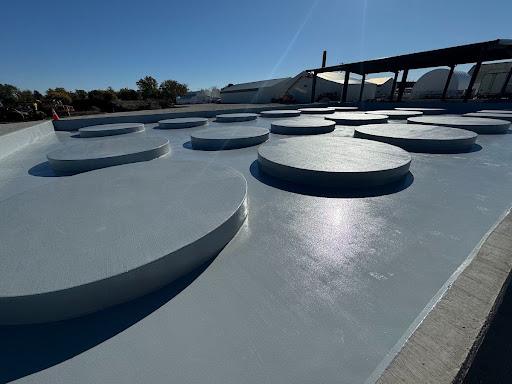
Chemical resistant flooring is the primary surface of your secondary containment system. Any gap, seam, or cold joint is a potential pathway into the slab and soil below.
Seamless Containment, Pits & Trenches
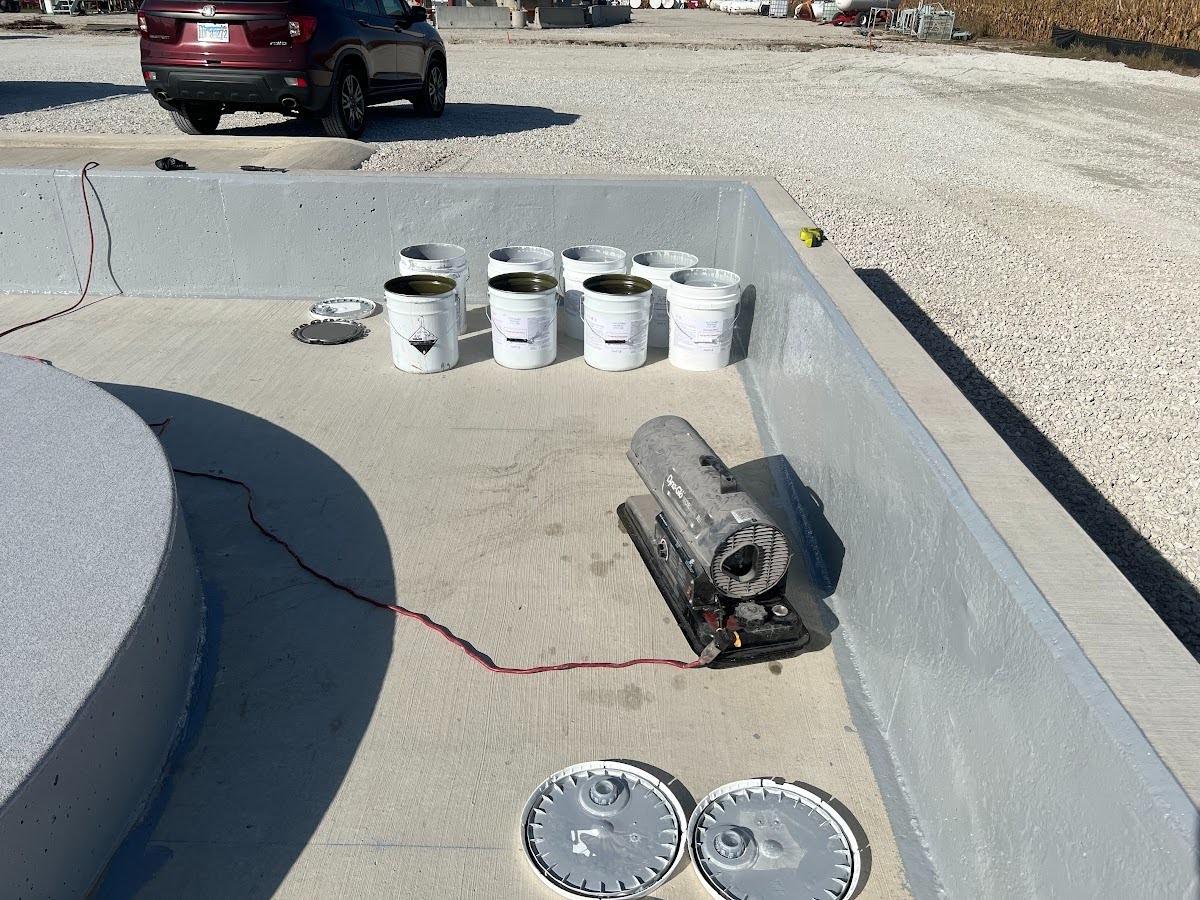
Acid Guard and Durapoxy HP are installed as seamless, monolithic systems that run up pit walls and trench sides with an integral cove base, so there are no joints or seams for acids or process chemicals to reach the concrete. Acid Guard is specified for containment trenches and sumps that see continuous exposure; Durapoxy HP covers the adjacent process areas with intermittent contact. Call 262-770-2218 to schedule a free site evaluation for your Racine facility.
Other High Performance Products
Electroguard SD/CD — Durable floor systems available with “electrically conductive” and “static dissipating” capabilities, plus superior chemical resistance.
Duraflex M — A flexible membrane system which can be applied under one of the Duraguard flooring or coating systems to provide additional stability and flexural strength.
Thermalguard — A heat resistant polymer flooring system formulation capable of with standing elevated temperatures up to 500°F (260°C).
Freezeguard — A unique formulation designed to cure at below freezing temperatures, on interior or exterior applications.
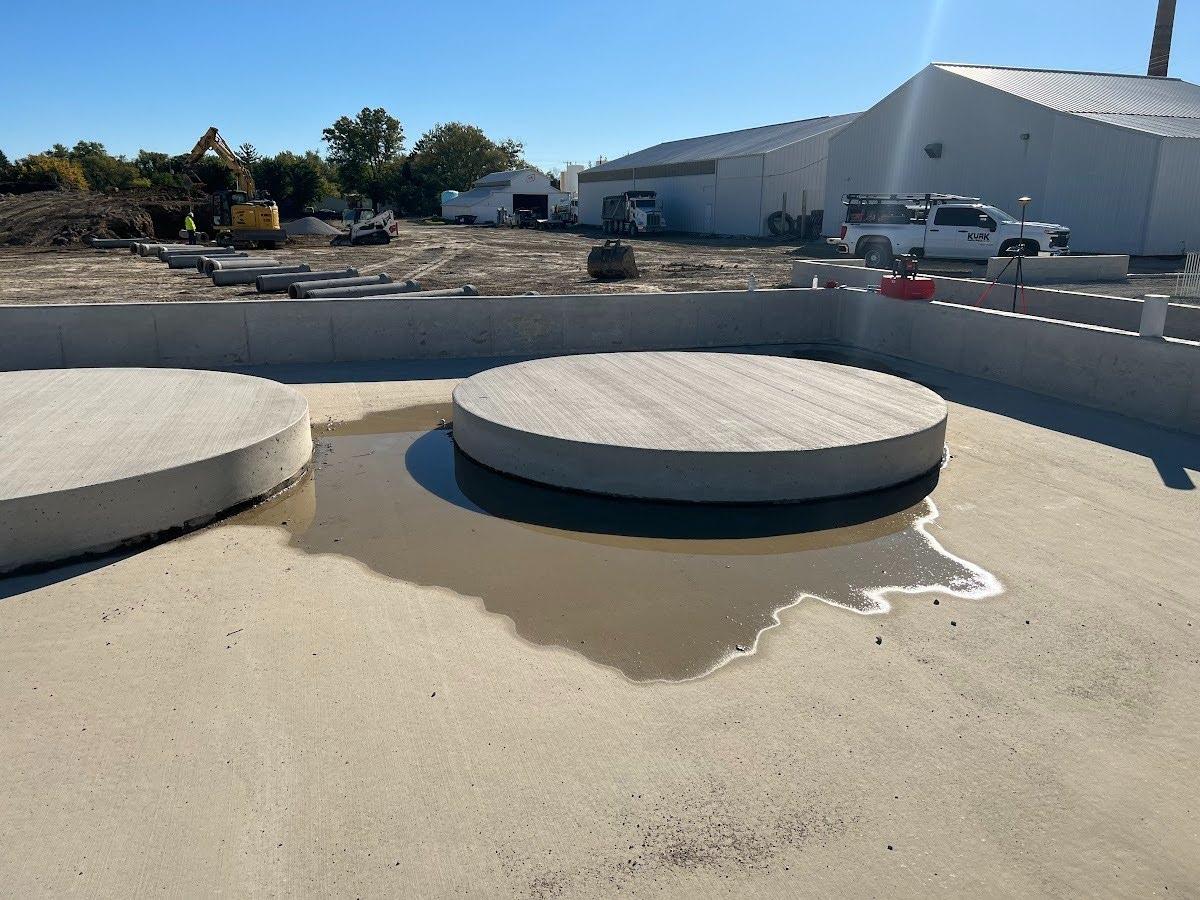
Duraguard’s chemical resistant flooring installations follow surface preparation and application standards established by the International Concrete Repair Institute (ICRI). Our chemical resistant flooring systems are also engineered to meet FDA guidelines for flooring in food processing and pharmaceutical manufacturing environments, ensuring your facility maintains full regulatory compliance.