Duraguard Protective Coating Solutions

Commercial & Industrial Concrete Floor Systems & polishing
Urethane Concrete Flooring in Racine — Thermal Shock & Chemical Resistant Systems for Food Processing and Industrial Facilities
Urethane concrete flooring in Racine solves a problem standard epoxy cannot: production floors that face 212°F steam washdowns, aggressive sanitizers, and heavy forklift traffic every single shift.
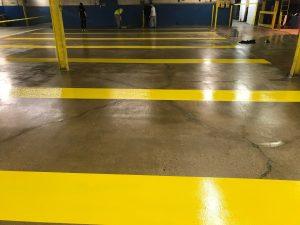
At Duraguard Protective Coating Solutions, we install Duraclad 903 — our modified polymer concrete system engineered for food processing plants, breweries, pharmaceutical facilities, and commercial kitchens.
We’ve been based in Racine since 1993, and we design, prep, and install every system in-house.
Call Duraguard at (833) 387-2482 to request a free on-site evaluation for your Racine facility.
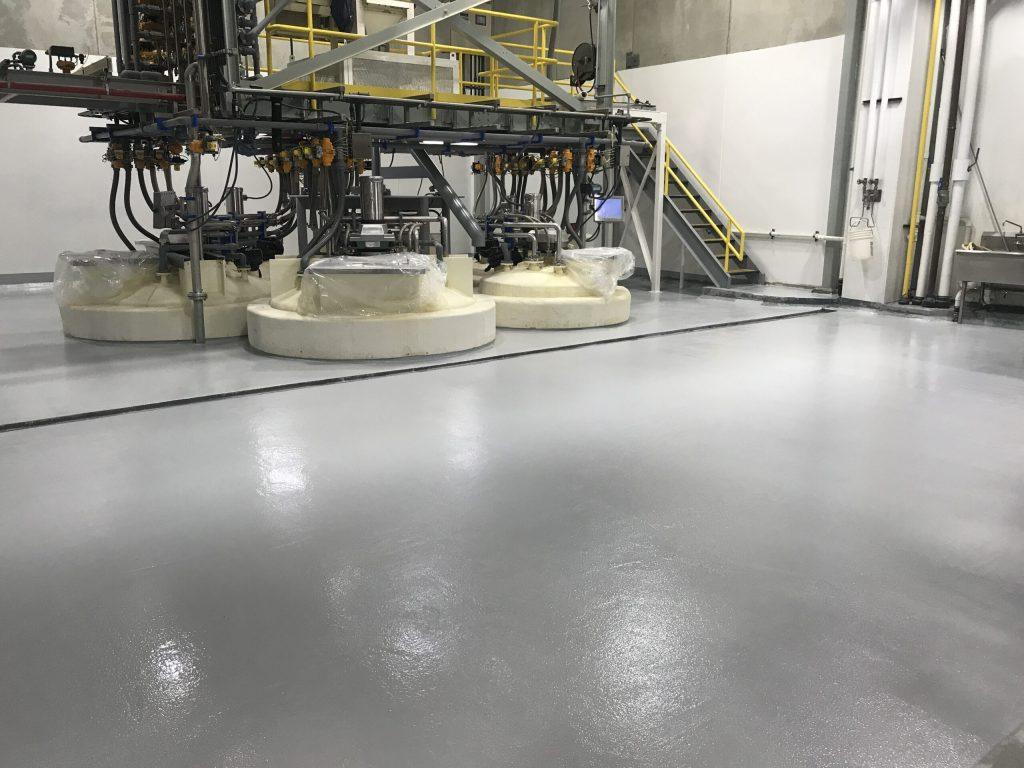
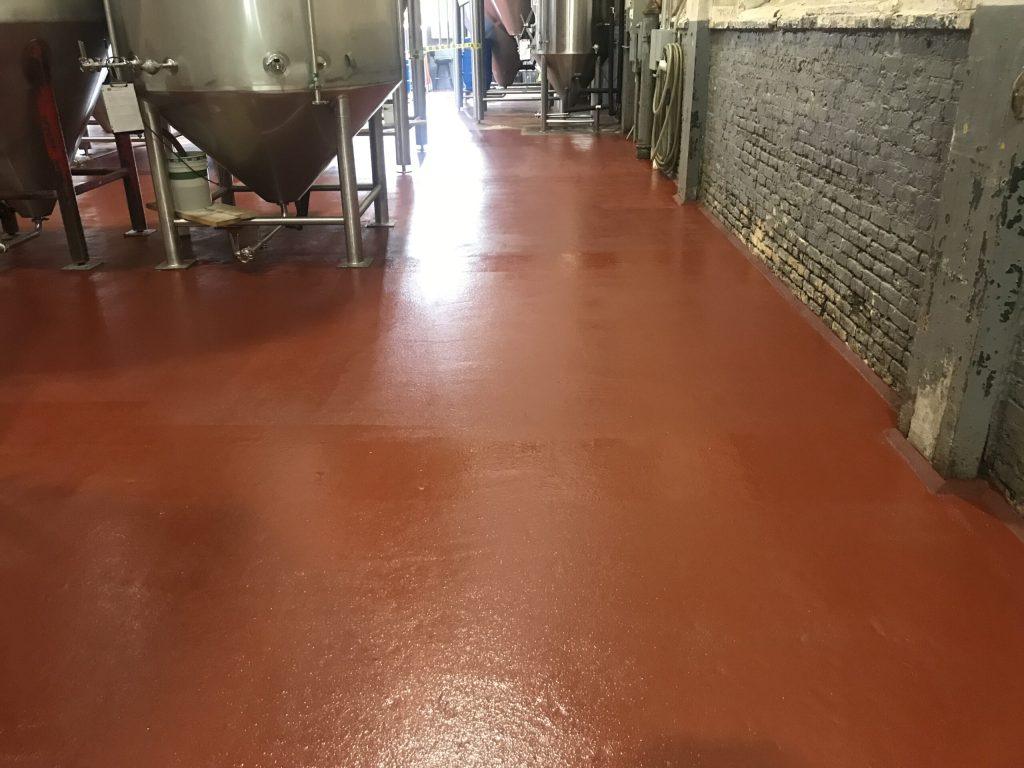
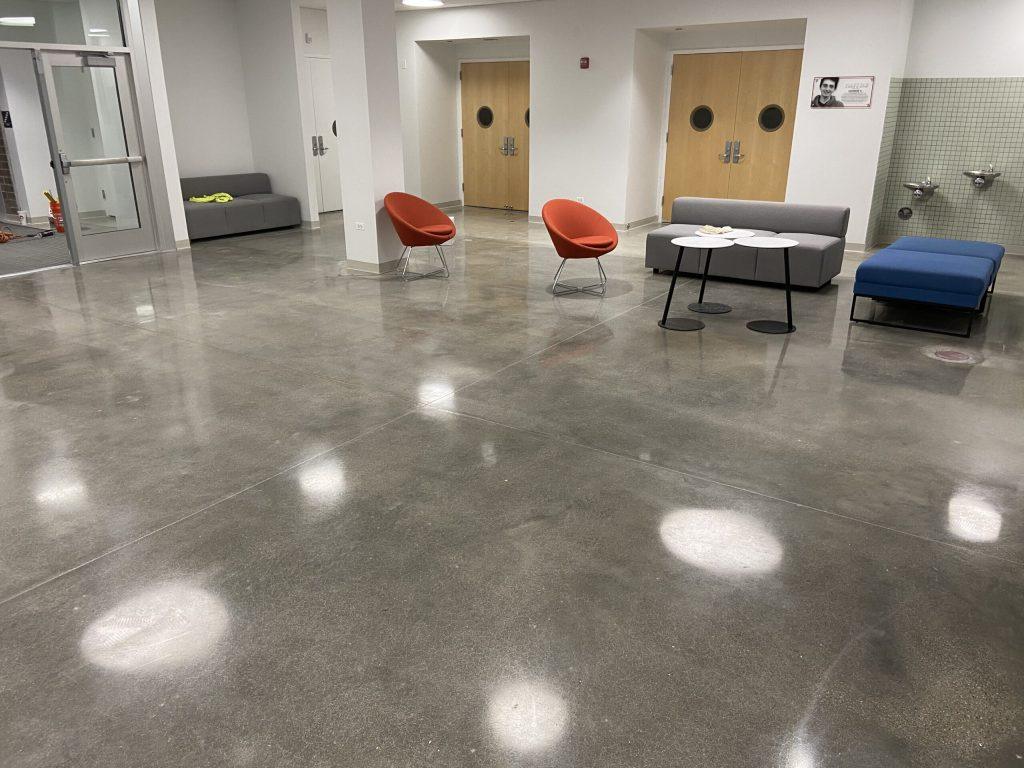
What Is Urethane Concrete Flooring and Why Racine Facilities Choose It
The Hybrid System That Outperforms Epoxy
Urethane concrete — also called polymer concrete or urethane cement — is a hybrid flooring system that combines the durability of concrete with the chemical and thermal resistance of polyurethane resins.
Unlike standard epoxy coatings applied at 10 to 20 mils, Duraclad 903 is installed at 3/16 to 1/4 inch thickness. That creates a monolithic, seamless surface bonded directly to the substrate.
The added thickness is what allows the floor to absorb thermal stress, impact, and chemical attack that destroy thin-film coatings in a matter of months.
Engineered for Racine’s Industrial Demands
Racine’s food, beverage, and manufacturing operations put floors through a brutal daily cycle: hot washdowns, cold storage, caustic sanitizers, and constant wheeled traffic.
Duraclad 903 handles thermal shock from hot water and steam up to 212°F followed by cold storage exposure — the exact cycling that cracks and delaminates standard epoxy.
It also delivers chemical resistance against organic acids, lactic acid, citric acid, caustic cleaners, fats, oils, sugars, and sanitizers — plus the mechanical durability to shrug off forklifts, pallet jacks, and dropped loads.
Not sure whether your facility needs urethane concrete or epoxy? Request a free site evaluation and we’ll recommend the right system.
Duraclad 903 Urethane Concrete System — Duraguard’s Premium Solution
What Makes Duraclad 903 Different
Duraclad 903 is not a generic urethane concrete. It’s a specifically formulated modified urethane concrete blend developed for the most demanding industrial and food processing environments.
It’s part of our private-label product line that also includes Durapoxy, Durathane, Static Guard, Acid Guard, and Duraquartz — all developed and refined in-house.
Key Performance Characteristics
- Thermal shock resistance: 212°F hot water and steam washdowns followed by cold storage, without cracking or delaminating.
- Chemical resistance: stands up to acids, caustics, fats, oils, sugars, and sanitizers used in regulated facilities.
- Seamless and non-porous: no joints, grout lines, or seams where bacteria harbor or moisture infiltrates — critical for USDA, FDA, and HACCP inspection requirements.
- Slip resistance: finished with varying degrees of texture to meet OSHA requirements for wet, greasy, and high-traffic environments.
- High-impact and abrasion resistance: the 3/16 to 1/4 inch build absorbs point-load impact that chips thinner coatings.
Typical Applications in Racine Facilities
- Food and beverage processing production floors and packaging areas
- Brewery brewhouses, cellars, and packaging lines
- Pharmaceutical manufacturing and laboratory environments
- Commercial kitchens and institutional food service
- Industrial manufacturing with chemical exposure or washdown requirements
Why Urethane Concrete Outperforms Epoxy in Racine’s Food Processing and Industrial Facilities
The Epoxy Failure Cycle in Thermal Shock Environments
Standard epoxy is a thin-film system that cannot flex with the thermal expansion and contraction of hot washdowns and cold storage.
In food processing and brewery environments, that cycling cracks and delaminates epoxy — often within the first few years of service.
Once the surface fails, moisture and contaminants penetrate the substrate. That leads to odors, bacterial harborage, failed inspections, and emergency repairs that pull production offline.
How Urethane Concrete Solves the Problem
Duraclad 903’s 3/16 to 1/4 inch thickness allows the system to absorb thermal stress instead of fracturing under it.
The polymer matrix bonds directly to a properly prepared substrate and moves with the floor through temperature swings.
Seamless cove base and transitions eliminate the weak points — drains, wall junctions, equipment pads — where epoxy typically fails first.
Total Cost of Ownership: Urethane Concrete vs. Epoxy
Many facility managers ask why they should specify urethane concrete when epoxy carries a lower sticker price. The answer is total cost of ownership.
Standard epoxy systems typically last 3 to 7 years in food processing or high-thermal environments before cracking, delaminating, or failing at drains and transitions.
Duraclad 903, properly installed, delivers 10 to 20 years of service life in the same conditions.
The higher upfront investment pays back in reduced maintenance, fewer production shutdowns for repairs, and elimination of the recurring cost of recoating a failed epoxy floor.
For facilities subject to health department or USDA inspection, a failed epoxy floor isn’t just a maintenance problem — it’s a compliance risk. Cracked, chipped, or peeling flooring harbors bacteria and can result in failed inspections.
Need help building the business case for urethane concrete? Call (833) 387-2482 and we’ll walk you through a system comparison for your facility.
Racine Industries That Rely on Urethane Concrete Flooring
Food and Beverage Processing
Meat and poultry processing, dairy and cheese production, bakeries, frozen food manufacturing, and food ingredient processing all subject floors to the exact combination of thermal shock, chemical exposure, and heavy traffic Duraclad 903 is engineered for.
The system meets USDA and FDA requirements for food contact environments and is well-suited to facilities subject to HACCP audits.
Breweries and Distilleries
Brewery environments combine organic acid exposure from wort, beer, and cleaning chemicals with thermal shock from hot CIP washdowns and cold fermentation areas.
Standard epoxy typically fails in these conditions within one to two years. Duraclad 903 is specifically proven for brewery and distillery applications — see our brewhouse flooring restoration work for an example of the Duraclad UPC system paired with a Durathane PA polyaspartic topcoat.
Pharmaceutical and Medical Manufacturing
Clean environments and medical manufacturing facilities require seamless, chemical-resistant floors that can be sanitized to exacting standards.
For Cirtec, a Racine medical instrument manufacturer, we installed an 8,000 sq ft plant floor using Durapoxy 520 and Durapoxy TC in August 2021 — delivering a finished, glossy light gray, easily cleanable surface.
Secondary Containment and Industrial Manufacturing
Any manufacturing environment with chemical exposure, washdown requirements, or extreme temperature cycling benefits from urethane concrete over standard epoxy.
Just northwest of Racine, we installed 6,000 sq ft of Duraclad 903 urethane concrete with Durapoxy Solvent Guard in a petroleum secondary containment area in Union Grove — covering the slab and tank pads with a continuous, chemical-resistant surface.
Commercial Kitchens and Cold Storage
Hospital kitchens, university dining, and large-scale food service operations benefit from the same thermal shock resistance that makes Duraclad 903 the standard in food processing.
The Duraguard Installation Process for Urethane Concrete Flooring
Free Site Evaluation and System Recommendation
Every project starts with an on-site evaluation of substrate condition, existing coating failures, traffic patterns, and chemical and thermal exposure.
We provide a detailed written proposal at no charge — including system specification, texture profile, and cove base requirements.
Surface Preparation
Proper surface preparation is as important as the product itself. Duraclad 903 requires thorough prep — typically diamond grinding or shot blasting and diamond grinding to open the concrete substrate and ensure proper mechanical bond.
Any existing coatings, oils, or contaminants must be fully removed before application. We invested in advanced shot blasting and diamond grinding equipment years ago so we control this stage in-house.
Duraclad 903 Application
Our crews are experienced in urethane concrete and understand the mixing ratios, application temperatures, and cure windows Duraclad 903 requires.
Base coat, aggregate broadcast for slip resistance, build coats to full thickness, seamless cove base at wall transitions, and a top seal coat for chemical resistance and cleanability.
Cure and Return to Service
We work around your production schedule, including nights and weekends, to minimize downtime during installation.
For broader context on our capabilities, see our high performance industrial flooring systems and the full catalog of industrial flooring applications we handle.
Maintaining Your Urethane Concrete Floor for Maximum Lifespan
Daily and Weekly Cleaning
Sweep or dust-mop to remove abrasive grit before it wears into the top seal coat. Damp mop with a pH-neutral cleaner and warm water; harsh solvents and acidic cleaners are not needed on a sealed urethane concrete floor. In washdown areas, rinse thoroughly so detergent residue does not build up at drains and along the cove base. Call 262-770-2218 to schedule a free site evaluation for your Racine facility.
Get a Free Floor Assessment
If your facility requires a high-performance urethane concrete flooring system — or if your current floor is failing and you need an evaluation — contact Duraguard today for a free on-site assessment. We will evaluate your current floor condition, review your operational requirements, and provide a detailed written proposal at no charge.
Call us at (833) 387-2482 or use our contact form to request your free evaluation.
Duraguard Protective Coating Solutions is proud to align with leading industry organizations that set the standard for flooring excellence and business integrity. We follow the guidelines and technical standards established by the International Concrete Repair Institute (ICRI), ensuring every project meets rigorous industry benchmarks. As an accredited member of the Better Business Bureau (BBB), we are committed to transparency, trust, and customer satisfaction. Duraguard is also recognized through Wisconsin Manufacturers & Commerce (WMC), reflecting our dedication to Wisconsin’s manufacturing and business community.